Tire, Brake and Suspension Checks for New Ford Models
Essential checks for safer handling, reliable braking, and smoother Ford driving.

Introduction
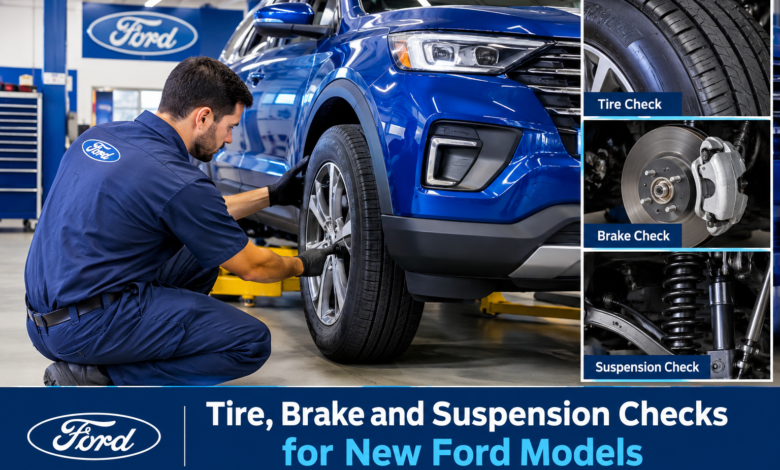
Keeping a new vehicle in excellent condition involves more than regular oil changes and cleaning. The tires, brakes, and suspension are among the most important systems to inspect because they influence handling, stopping performance, ride comfort, and everyday driving confidence. For owners of new Ford models, routine checks can help identify wear or developing problems before they become more expensive concerns.
Ford maintenance information emphasizes inspections of tires, steering components, suspension parts, and braking systems as part of broader vehicle maintenance. Ford’s inspection materials include tire tread depth, tire pressure, wheels, control arms, ball joints, springs, shocks, struts, brake pads, rotors, brake lines, and related components.
Why Regular Checks Matter
Even a new Ford can experience changes in tire pressure, brake wear, or suspension performance through normal driving. Road surfaces, weather, driving conditions, mileage, and vehicle loading can all affect these systems.
A regular inspection gives drivers an opportunity to notice issues early. It can also help maintain predictable vehicle behavior and support the maintenance schedule recommended for the specific Ford model.
Because specifications differ between vehicles, owners should always use the vehicle’s own owner’s manual and tire information label for model-specific requirements.
Tire Checks for New Ford Models
Check Tire Pressure
Correct tire pressure is one of the simplest maintenance checks a driver can perform. Ford owner information states that recommended tire pressures are listed on the tire information label located on the driver’s-side B-pillar. Ford guidance also advises checking tire pressures when the tires are cold and doing so regularly.
Drivers should not rely on a general pressure number found online because the correct specification can differ according to vehicle, tire size, loading conditions, and other factors.
Inspect Tread and Tire Condition
Tire inspections should go beyond pressure. Look for unusual tread wear, visible damage, cuts, or other abnormalities. Ford inspection documentation specifically includes tire tread depth, normal tire wear, tire pressure, tire size, wheels, and the tire-pressure monitoring system among inspection points.
Uneven wear can also provide useful clues about wheel alignment or suspension-related concerns. If a tire appears damaged or is wearing unusually, professional inspection is appropriate.
Do Not Ignore the Spare Tire
If a Ford model is equipped with a spare tire, it should also receive appropriate attention. Ford owner information includes spare-tire pressure within relevant tire-pressure guidance.
A spare tire is only useful when it is in suitable condition and correctly maintained.
Brake Checks for New Ford Models
Inspect Brake Pads and Related Components
Braking systems naturally experience friction and wear. Ford inspection documentation identifies brake pads and shoes, rotors and drums, calipers and wheel cylinders, brake lines and hoses, parking brakes, and other braking components as inspection points.
A professional inspection can determine whether brake components are operating as expected and whether wear requires attention.
Pay Attention to Changes While Driving
Drivers should take changes in braking behavior seriously. Unusual noises, vibrations, pulling to one side, or a noticeable change in pedal feel can indicate that the braking system needs professional attention.
These symptoms do not automatically identify one specific fault, so diagnosing the cause should be left to a qualified technician rather than assuming that a particular component needs replacement.
Check Brake Fluid and Related Systems
Ford’s maintenance inspection information includes checking the brake reservoir and inspecting brake-related components during scheduled service.
The correct maintenance procedure depends on the individual Ford model, which is why the owner’s maintenance schedule should remain the primary reference.
Suspension Checks for New Ford Models
Inspect Shocks and Struts
The suspension system helps control vehicle movement and contributes to handling and ride quality. Ford maintenance information includes shocks, struts, and other suspension components among its multi-point inspection areas, including checks for leaks or damage.
A new vehicle does not mean suspension components should never be inspected. Regular checks can help identify damage caused by road conditions or other unexpected events.
Examine Steering and Suspension Components
Ford inspection documentation includes control arms, bushings, ball joints, tie rods, sway bars and links, springs, struts, shocks, and steering components.
These components work together, so a problem in one area can influence vehicle behavior elsewhere. Strange noises, unusual handling, or changes in ride quality are reasons to arrange an inspection.
Watch for Alignment Problems
Wheel alignment is another important part of overall tire and suspension condition. Ford inspection documentation lists wheel alignment as an item to check when necessary.
Uneven tire wear or changes in steering behavior can be reasons for a technician to evaluate alignment.
When Should New Ford Models Be Inspected?
The correct inspection schedule depends on the Ford model and its specific maintenance requirements. Owners should follow the scheduled maintenance information supplied with their vehicle rather than applying one universal mileage or time interval.
More frequent attention may be appropriate when a vehicle experiences demanding operating conditions or unusual road conditions. Ford maintenance information also emphasizes multi-point inspections as part of scheduled service.
Simple Checks Owners Can Make
Several basic observations can be made without attempting complicated repairs:
- Check tire pressure according to the vehicle’s recommended specification.
- Look at the tires for visible damage and unusual wear.
- Pay attention to changes in braking behavior.
- Notice unusual suspension or steering noises.
- Watch for changes in ride or handling.
- Follow the vehicle’s scheduled maintenance information.
- Have suspected mechanical problems assessed by a qualified technician.
These simple habits can help owners become more aware of their vehicle’s condition.
Benefits of Professional Inspections
A professional inspection can examine components that are difficult to evaluate during a quick driveway check. Ford’s multi-point inspection information covers numerous areas, including tires, steering, suspension, shocks and struts, and braking components.
Professional inspection is particularly useful when a driver notices a new symptom or when a vehicle has experienced a significant road impact or other event that could affect wheels, tires, steering, brakes, or suspension.
Conclusion
Tire, brake and suspension checks for new Ford models are an important part of responsible vehicle ownership. Regular tire-pressure checks, tire-condition inspections, brake assessments, and suspension inspections can help owners identify potential problems and maintain dependable vehicle performance.
The most important point is to avoid using one generic maintenance rule for every Ford vehicle. Tire pressures, service schedules, equipment, and inspection requirements can vary by model. Using the owner’s manual and vehicle-specific maintenance information provides the most reliable guidance.
With consistent maintenance and timely professional inspections, Ford owners can better protect their investment while supporting safe, comfortable, and predictable driving.